
Opinion: A 24-Hour Library Would Do More for Night Safety Than More Police
A staffed, well-lit 24-hour library gives night workers and late travellers somewhere safe to be — and that does more for night-time safety than another patrol car.
It is 2:40 in the morning and the last bus has gone. A hospital cleaner waits under a flickering awning for a lift that is twenty minutes away. A student who missed the last train walks the long way round because the shortcut is unlit. A delivery rider sits on a bollard, charging his phone from a power bank, with nowhere to wait out the gap between orders. None of these people are in danger in any dramatic sense. They are simply alone, in the dark, with no door to open. That is the condition we usually call "night safety", and it is not solved by putting another car on the road.
Safety Is Mostly a Question of Who Else Is Around
Most nights go wrong quietly. Not with an incident, but with an accumulation of small avoidances: the woman who takes the longer route, the teenager who does not go to the evening class, the nurse who stops cycling to work in November and starts paying for taxis she cannot really afford. Cities measure crime and then wonder why people still feel uneasy. The two things are related, but they are not the same, and the gap between them is where policy usually fails.
What changes that feeling is not the sight of a patrol car — though it helps — but the sight of other people, and of light that is doing its job. A street with four lit windows above it and a bus shelter with a working screen feels different from an identical street with none. The physical fabric of the night does more work than we give it credit for. A bench under a lamp, a wall you can lean against without feeling you are loitering, a doorway that is open rather than locked: these are safety infrastructure, and they cost a fraction of what we spend on enforcement.
The problem is that almost every public building we already have closes at six. We built a city that refuses to be present after dark, and then we are surprised when the people who have to be out in it feel exposed.
What a Patrol Actually Delivers
I am not arguing against police. When something is happening, you want a trained person with authority to arrive quickly, and no amount of soft seating substitutes for that. But patrol expansion is a blunt instrument aimed at a specific problem, and the problem most night workers describe is not "someone is committing a crime against me". It is "there is nowhere for me to be".
A patrol car passes a given corner perhaps a few times a night. It cannot be everywhere, it is expensive per hour of presence, and the presence it provides is transactional: it observes, it intervenes, it leaves. It also, unavoidably, changes the character of a street. Some people are reassured by uniforms; others — the ones who are homeless, or young, or undocumented, or simply tired and waiting — read the same car as a reason to move on. Both reactions are real and any honest night policy has to hold them at once. You get less lingering, and lingering is exactly what makes a street feel alive at three in the morning.
The Case for a Lit, Staffed Room at 3 A.M.
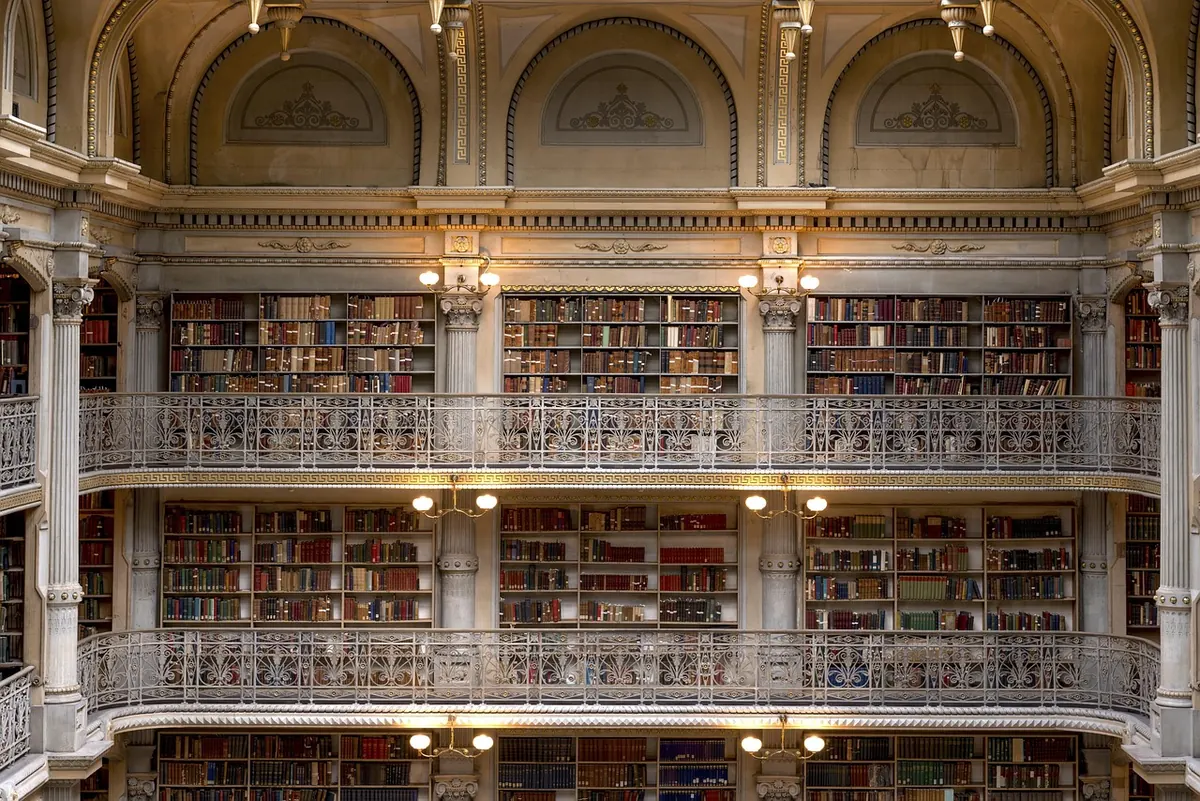
Picture instead a building that is open, warm, obvious, and free to enter. A 24-hour library is the most familiar version, but the same principle works with a night-time study centre, a community hall with a permanent late desk, or a small annexe attached to a transport interchange. What matters is that it is a place with a door, a light above the door, and a person behind a desk.
The effects are cumulative and slightly indirect, which is why they get overlooked in budgets. A steady trickle of people through a doorway keeps the pavement in front of it occupied. Occupied pavements are the single cheapest deterrent to the kind of opportunistic trouble that happens in empty space. A woman who knows there is somewhere to sit and wait for her lift does not stand anxiously in a car park; she goes inside, and the car park becomes marginally emptier. A student who can study until midnight takes the evening class. These are not dramatic outcomes. They are the sort of thing that, over a year, quietly changes how a district feels after dark.
There is also the plain fact that libraries are trusted. People know what happens inside them, they know they will not be asked to buy anything, and they know the rules are gentle and legible. That trust is an asset built over decades and it is currently being wasted every evening at six o'clock.
Staff, Not Just Sofas
The room is the easy part. The people in it are what makes the difference, and this is where well-meaning schemes fall down. A 24-hour space with an unstaffed entrance and a security guard on the door is not the same thing as a staffed one, and it can be worse: it concentrates people in a place where help is not available.
What the night desk actually needs
- Someone who is awake and expecting to talk. Not a caretaker mopping around the edges, but a person whose job is the front desk.
- Basic de-escalation training. Most night conflict is noise, frustration and bad sleep, not violence. Calm words early prevent calls to police later.
- A local knowledge sheet. Which taxi firms are licensed, where the night bus stops, which number to ring for the out-of-hours housing line.
- First aid and a defibrillator. Routine, cheap, and occasionally the whole point.
- A quiet corner. Some people need to sit and cry for ten minutes. Give them a chair facing a wall and leave them alone.
- A clear boundary. Sleeping overnight on the premises, and how to move someone on kindly, should be written down before opening night, not improvised at four in the morning.
Pay matters too. A night shift is a real shift. Staff it with volunteers for six months and it will collapse in the seventh. If the service is worth having, it is worth rostering properly, with the same care you would give to a control room.
A Practical Checklist for a Pilot Night
Anyone can try this before committing to a permanent budget. Run four nights, measure what happens, and decide.
- Pick one building with good lighting, step-free access and a toilet. Proximity to a night bus stop counts for more than square footage.
- Fix the outside lighting first. If the pavement in front is dark, nothing inside will compensate.
- Agree opening hours with the people who will use it — hospital staff, cleaners, students, shift workers on the industrial estate. Ask them what time they actually finish.
- Staff the desk with two people per shift, never one. Nobody should be alone at four in the morning.
- Tell the local police team the address, the hours and the phone number, so a patrol knows the building exists.
- Keep a simple paper log: how many people came, what they asked for, any incidents. Count the requests for directions to the night bus.
- Review after a month and publish the log. Numbers, not anecdotes, are what win the next year's budget.
The Objections Worth Taking Seriously
The fair objection is cost: heating, lighting, staff and insurance for a building that will be half empty at times. That is a real bill. But compare it with the cost of an additional night patrol, and then compare what each one delivers across a year. A patrol moves; a room stays. If money is genuinely tight, start with two nights a week during exam periods and the winter months, when the need is sharpest.
The second objection is about who turns up. In practice, late-night rooms attract a narrow, unglamorous crowd: shift workers, students, people waiting for lifts, the occasional person who simply cannot face going home yet. Some venues worry this will change their character. It will — that is the point. A library that serves the night is more useful to its neighbourhood than one that serves only the afternoon.
And the third: staff safety. It is a legitimate concern, and the answer is training, two-person shifts, good sightlines, a working phone and a clear policy on when to call for help rather than handle something alone. Do not open a night service you have not resourced to close safely.
What to Ask For at the Next Budget Meeting
When the council debates night-time safety this year, the question on the table will probably be framed as more patrols or fewer. Try to widen it. Ask which public buildings are already lit and heated at night and whether one of them could stay open. Ask how many people are waiting, right now, on unlit pavements for a bus that runs every hour. Ask what the cost of a staffed night desk is against the cost of a patrol car, and then ask which one is still there at five in the morning.
The answer will not be "no police". It will be a better allocation: patrols for the things patrols do well, and doors, lights and people for everything else. A city that stays open is a city that looks after itself after dark. That is a quieter kind of safety, and it lasts longer.
Photo: Falkenpost / Pixabay