


Stories from the 4 a.m. Bakery: What Overnight Bakers Want Daytime Customers to Know
Overnight bakers on timing, fatigue and craft — and a practical guide to being a better daytime customer at the counter.
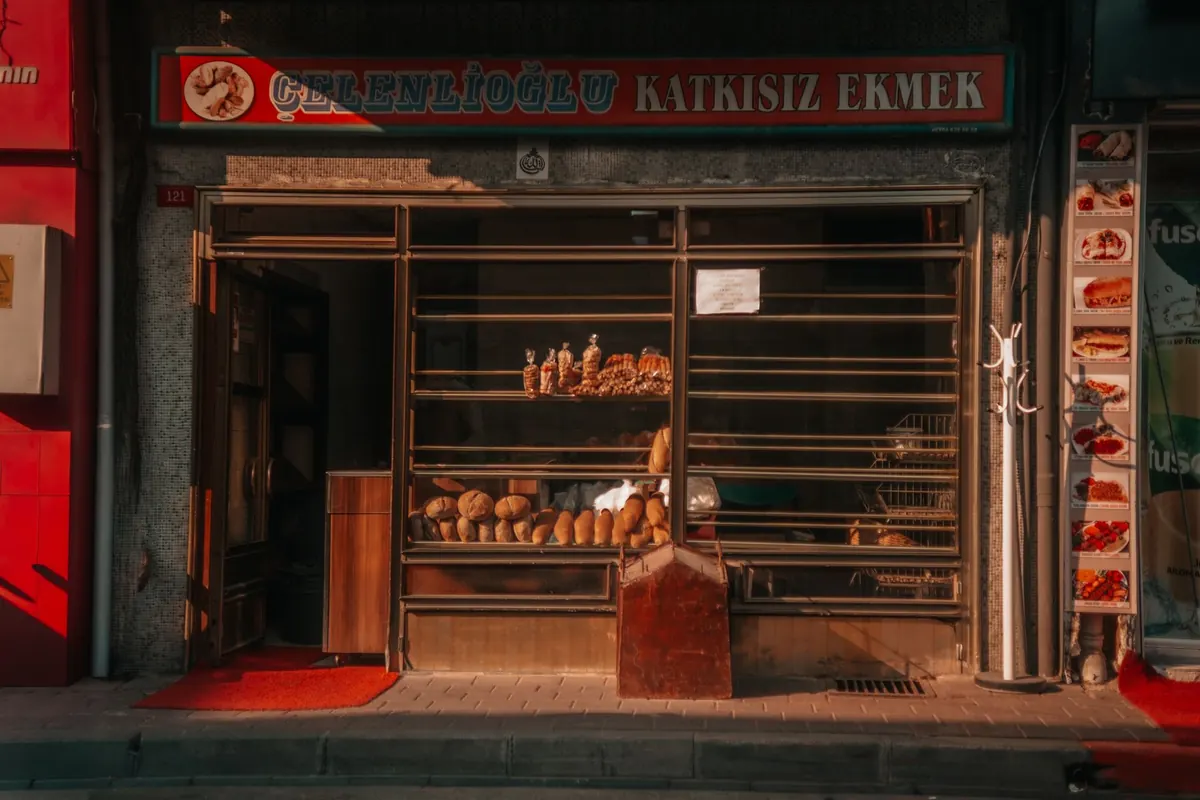
At ten to four in the morning, the street outside is empty enough that you can hear a bus three blocks away. Inside, the ovens have been running since midnight, the floor is dusted white, and someone is standing at the bench with a bench scraper, working out the timing of a dough that has been waiting since yesterday afternoon. The first customer will walk in around six. By then, most of us will have been at work for the better part of a night.
What follows is not a complaint. It is closer to a set of notes passed across the counter — the things we would say if there were time, and if the person in front of us weren't already late for a train.
The Day Begins When Yours Ends
People assume the night shift starts when the shop goes dark. In a bakery it starts much earlier than that, and it starts with feeding. The sourdough culture gets its flour and water the morning before it is needed, and everything after that is a chain of waits: mix, rest, fold, rest, shape, proof, bake. A loaf you buy at nine on Saturday was mixed on Friday afternoon, shaped around nine at night, left in the cold room to rise slowly, and baked at half past five. A croissant has a longer paper trail still — the butter gets laminated days ahead, because the layers need time to relax or they tear.
So the first thing worth knowing about timing is that fresh is not the same as fast. Fermentation can be hurried. A warmer room, a little more yeast, a shorter proof, and the bread will be out of the oven sooner. It will also be flatter in flavour, paler in the crust, and stale by early afternoon. Slowing it down is a decision someone makes at one in the morning, standing in a cold room, when going home early would be very easy.
Fatigue Is an Ingredient Nobody Lists
Somewhere around four, the night turns. It isn't dramatic — nobody falls over. It's more that the hands keep working while the head develops a slight lag, and small errors start creeping in. A batch goes into the mixer without salt. A tray ends up too close to the top element. Two stacks of proofing baskets get swapped and the wrong dough is baked first. None of it looks like a crisis. All of it is food someone will pay for and take home.
We manage it better in some weeks than others. What actually helps is unglamorous: eating something real at two in the morning instead of whatever is sweet and within reach, rotating the jobs so nobody shapes for six hours straight, sitting down for ten minutes with the lights off, keeping the radio low enough that nobody has to shout over it. A bench scraper with a good edge saves more energy than it sounds like it should.
The drive home matters too. A baker finishing at seven is a tired person on a road full of people heading to work. Treat that trip like the risk it is: windows down, no long motorway stretches on autopilot, and a proper sleep when you get in. And if sleeplessness turns into a persistent problem rather than a bad week, that is worth raising with a doctor rather than with another coffee.
Craft Happens Where Nobody Is Watching
The part that matters most is the part no customer ever sees. It's the tension drawn across the surface of a dough during shaping, so the loaf holds its height instead of spreading. It's the angle of the blade when scoring — too upright and the cut drags, too shallow and the loaf bursts where it likes. It's whether the oven was given an extra ten minutes to soak the heat before the first batch went in.
Nobody claps at four in the morning. The bread either rises or it doesn't, and by the time the door opens, the verdict is already in.
That absence of an audience is the whole discipline. You do the two-hundredth loaf the way you did the first because the dough doesn't care whether you are inspired, and because the person buying it will taste the difference even if they can't say what it is. Craft in a bakery is not romantic. It is repetition plus attention, held together by a clock.
Nine Things We Wish We Could Say at the Counter
- "Sold out" is not a strategy. We bake what the ovens, the shelves and the hands can carry. When the last one goes, it's gone.
- Ask what's good today, not what's freshest. Everything on the shelf is from this morning. What varies is what came out best, and we'll tell you honestly.
- Order ahead for the specific thing you want. If you need a particular loaf for Saturday lunch, a phone call on Thursday is worth more than arriving hopefully on Saturday.
- Don't tap the glass, and don't reach in with the tongs yourself. Point, ask, let us bag it. The tongs live in a place for a reason.
- Come late and the case will look different. It isn't a slight; it's arithmetic. Ask what keeps well overnight — often it's the rye, the seeded loaves, the things that improve.
- "Do you ever sleep?" Yes, mostly. Ask about the bread instead; we'd rather talk about the bread.
- Tell us when something is wrong. A dense crumb, a burnt base, a pastry that tastes of the fridge. Bring it back or send a message the same day. We would much rather fix it than not know.
- Prefer the paper bag. Bread stored in plastic goes soft on the outside and stays dry inside, which is the wrong way round. Paper, or a cloth, or the freezer if you're keeping it more than a day.
- Say good morning to the person serving you at six. They may have been here since ten the night before, and they are still counting loaves in their head.
The Small Kindnesses Travel Both Ways
The customers who make the night easier are rarely the ones who spend the most. They're the ones who learn a name, who say "whatever you recommend" when the shelf is thin, who mention the person at the counter in a review rather than only the croissant. One regular used to bring back the paper bags, folded. Another learned that the second bake lands mid-morning and started coming at eleven instead of nine, which smoothed the whole day for everyone.
It goes the other way too. We hold a loaf back when we know someone's running late. We remember who can't have nuts. We put the good one aside. A bakery runs on that ledger of small remembered things as much as it runs on flour.
Before You Reach for the Tongs: A Practical Guide
- Learn the rhythm of the shop. Ask, once, when the second bake comes out. Then plan around it instead of being disappointed by it.
- Order in advance for anything specific, especially at weekends and holidays. It costs you a phone call and saves everyone a shrug.
- Arrive early for choice, late for conversation — and know that the two cases will not look the same.
- Ask, don't guess. "What would you take home?" is the single most useful question you can ask at a bakery counter.
- Buy the amount you'll actually eat, and freeze what you won't. A loaf sliced and frozen on day one is better than a loaf going stale on the counter.
- Report problems straight away. Kindly, and with the detail — which loaf, which day. That's how a batch gets fixed.
- Be patient at the peak. The queue at eight in the morning moves as fast as two people with hot trays and a card machine can move it.
None of this is complicated. It mostly comes down to knowing that the shop you walk into at seven has been awake for hours, that the bread was decided long before you saw it, and that the person handing it over is at the end of a long night rather than the start of a short day. Say good morning. Take the paper bag. Tell us if the crust was tough. That's enough.
Photo: Barış Türköz / Pexels